Websites for
Websites for artists and makers
Two different things get called an artist's website: a portfolio that sells commissions, and a shop that sells work that is already made. I build both, and after one question about how you sell, I can tell you which one you actually need.
Portfolio first, shop when it earns it
The portfolio version is a selected-works site with a commission page: what you make, how commissions run, what a request involves, and an inquiry form. The shop version is a real storefront with products, checkout, and shipping. Most makers need one or the other. A commission-only ceramicist does not need a cart, and a printmaker shipping fifty orders a month does.
Getting that decision wrong is the expensive mistake. A shop nobody orders from is a monthly bill, and a commission artist with no inquiry structure is leaving the most valuable page off the site.
A commission atelier, as proof
The Gnawhaus demo is a concept build for a commission atelier: a small studio producing bespoke character work in limited runs. It shows the machinery commissions need: a gallery organized by past builds, a clear explanation of how a commission works, a queue with honest open and closed states, and an intake form that asks the questions a real brief would.
The design carries the other half of the lesson. It feels like the studio it represents instead of a template with photos dropped in, which is what custom work sells on: the client is buying your taste as much as your labor.
When the shop earns its keep
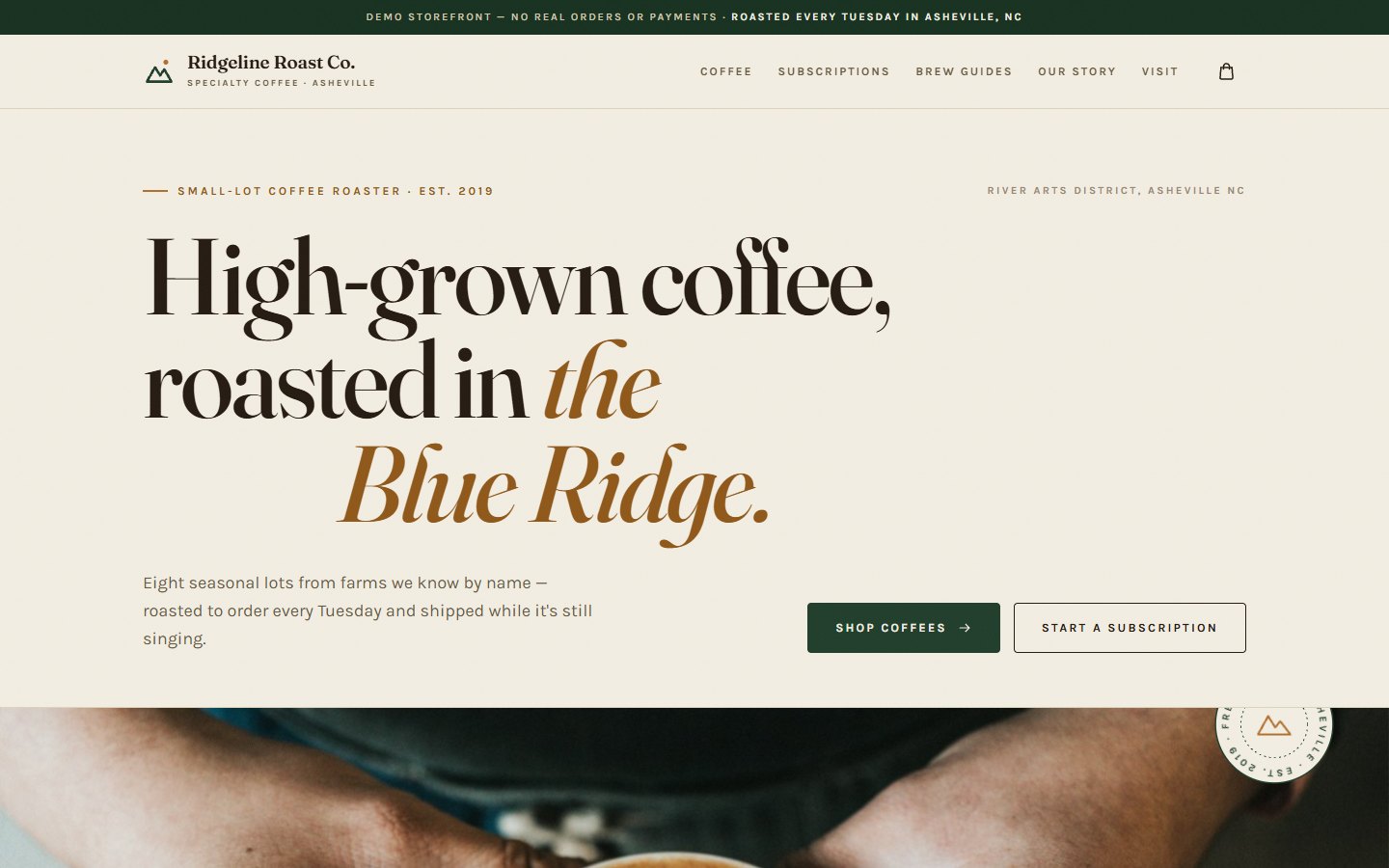
A storefront makes sense when two things are true: you have work that exists and can ship, and enough people buying it that a checkout is worth maintaining. The Ridgeline Roast demo is a concept storefront for a small-batch coffee roaster that shows the shape: real product pages with the details buyers ask for, a subscription builder, and a cart that works end to end. The case study has the details.
Under that sits a real platform choice. WooCommerce if you want to own the stack, Shopify if you want the platform to mind the plumbing. I build both and will give you a straight answer about which fits your operation.
The Etsy situation
Etsy is a decent first sale and a bad business partner: it takes a cut of every order, shows your customers competitor listings on your own product page, and owns the customer relationship entirely. The sellers who do well on it long-term are usually the ones whose repeat buyers check out somewhere else.
Your own site does not have to replace Etsy. Keep the marketplace for discovery if it works. The site is where repeat buyers, wholesale inquiries, and commissions land, on a domain you own, with no rent owed on the relationship.
The commission intake
A good commission page filters for you. The intake asks what they want made, rough budget, deadline, and any reference material, so the first reply from you is an actual answer instead of five clarifying questions. The queue state is honest: commissions open, closed, or waitlist, with dates.
That honesty is worth more than it looks. An atelier that says clearly when the next slot opens gets better briefs and fewer tire-kickers than one whose inbox is a free-for-all.
Cost and timing
Portfolio and commission sites start at $1,000 and typically launch in one to two weeks. A storefront adds scope for products, payments, and shipping, and the quote is fixed after we talk. You own the site, the domain, and the customer list when it is done.
If your current site or marketplace page might be worth keeping, a free audit tells you what is worth saving first.
Proof
A concept storefront for a small-batch roaster: real product data, a stepped subscription builder, and a cart that works. For the commission side, the Gnawhaus atelier demo is linked above.
Questions
Portfolio site or online store: which do I need?
One question decides it: do you have finished work people can buy right now, in enough volume to justify a checkout? Yes means a storefront. No, or mostly-commissions, means a portfolio with a proper commission intake. Many makers start on the portfolio and add the shop later, which is an easy extension rather than a rebuild.
Can the site take commission requests?
Yes. The intake form asks what they want made, the budget ballpark, the deadline, and reference material, so your first reply is a real answer. The commission page can also show honest queue states, open, closed, or waitlist, which filters out tire-kickers and sets expectations.
I sell on Etsy. Do I still need my own site?
Keep Etsy if it earns. The problem is Etsy owns the customer relationship and shows your buyers competitor listings on your own product page. Your own site is where repeat buyers, wholesale inquiries, and commissions land on your domain, with no cut owed on the relationship.
Can you photograph my work?
I am a developer, not a photographer, and I would rather say that plainly. What I can do is hand you a shot list of exactly what the site needs, including angles, backgrounds, and the detail shots buyers look for, and build around whatever a photographer or your phone produces.
Talk to me
Ready when you are. Start a project.