Websites for
Websites for government contractors
In Northern Virginia, a small contractor's website is not marketing, it's due diligence. Contracting officers and primes check your site before they check your SAM profile, and what they need to see is specific: your capability statement, your codes, and your past performance.
What a govcon site actually needs
Four things, one click deep each. A capability statement download, the actual PDF, not a page describing it. An info block with your NAICS codes, UEI, CAGE code, and contract vehicles, because a prime building a team searches for exactly those. A past-performance section with real contracts described in plain language. And a design that reads credible rather than flashy, because the audience is a contracting officer on a deadline, not a consumer.
Everything on the site should assume the visitor has ninety seconds. The companies that get the teaming call are the ones whose site answered the question before it was asked.
The capability statement connection
The capability statement is the center of a govcon site, so I treat it that way: the PDF downloads from the homepage and the contact page, and the same information also exists as real text on the site, because PDFs alone don't rank and don't read well on phones.
I also design the statement itself. A styled one-pager PDF runs about $300 to $400 and uses the same one-page design work I do for landing pages. If your capability statement is a Word doc from three years ago, that's usually the first thing we fix.
Set-asides and small-business positioning
If you hold certifications, 8(a), HUBZone, SDVOSB, WOSB, state SWaM, they get listed accurately and early, because primes searching for teaming partners filter on exactly those. The site states what you hold, where you're registered, and what you actually do, without inflating any of it.
That honesty cuts both ways: the site claims the capabilities you have, not the ones you wish you had. Government buyers verify, and a site that overstates costs you more than a plain one that doesn't.
An honest disclosure
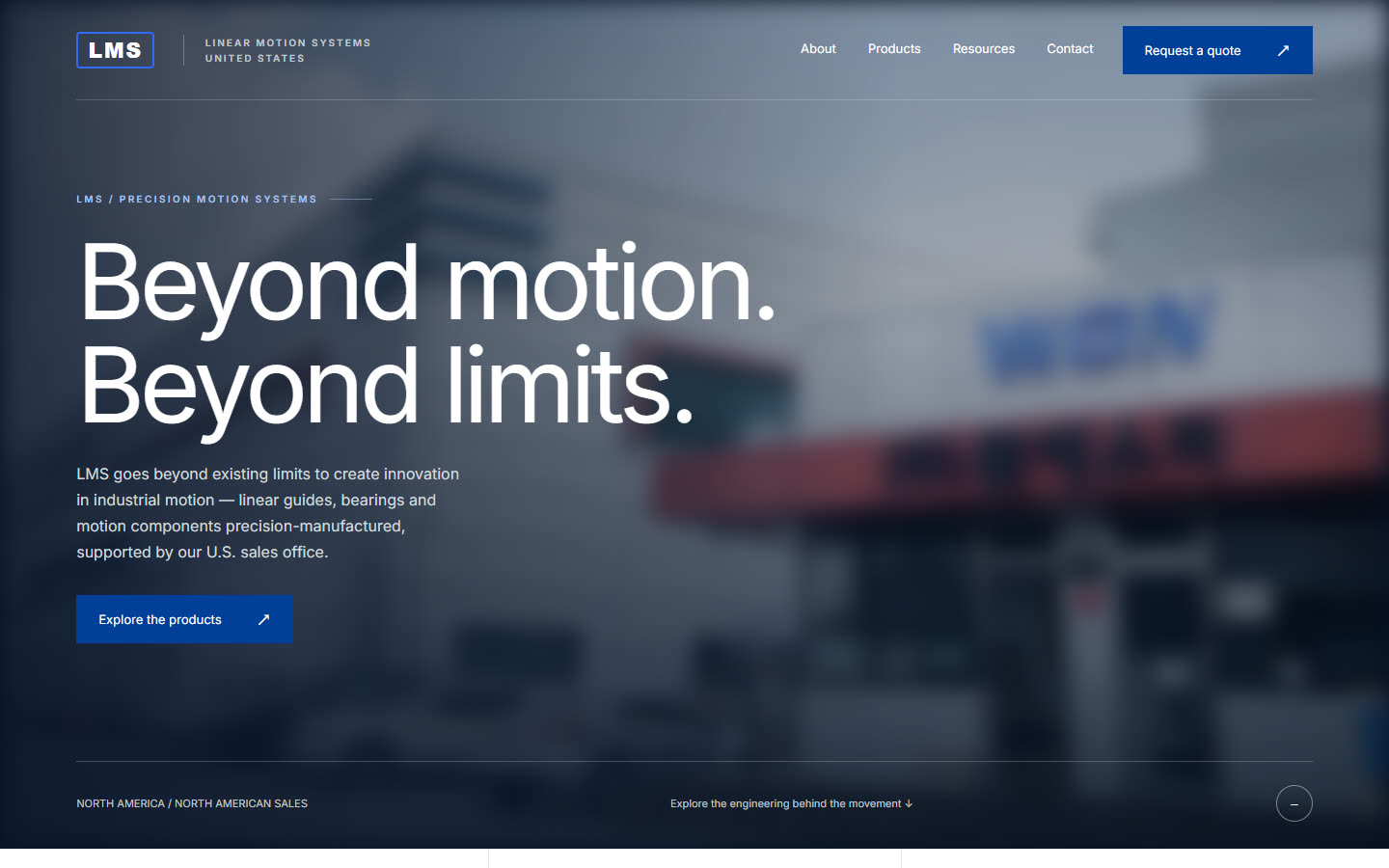
I have not shipped a site for a government contractor yet, so this page is the approach, not a portfolio claim. The closest public work is a critical-infrastructure company's site built under NDA, anonymized but live, and a concept build for a precision components manufacturer that shows how I'd present capability-driven B2B work.
Pricing follows everything else I build: a focused govcon site starts at $1,000 and launches in one to two weeks, quoted fixed after we talk. If the real need is only the capability statement PDF, that's the $300 to $400 deliverable instead, and I'll tell you which one you actually need.
Proof
Honest disclosure: no shipped govcon client site yet. Adjacent proof is a critical-infrastructure company's site, anonymized per NDA, and a concept build for a precision components manufacturer.

Questions
What goes in a capability statement?
One page with five blocks: core competencies, differentiators, company data (NAICS codes, UEI, CAGE code, set-asides you hold), relevant past performance, and contact info with a named point of contact. I design it as a styled PDF and put the same content on the site as readable text.
Do you help with SAM.gov registration?
No, and I'll say that plainly: registration, certifications, and set-aside applications are your side of the table. What I build is the site that presents all of it credibly once it exists.
Can you design just the capability statement PDF?
Yes. A styled one-pager runs about $300 to $400 and it's a common standalone job: the same layout discipline as a landing page, delivered as a PDF you can hand to primes and contracting officers.
We already have a site. Can you add the govcon pieces to it?
Usually yes. The capability statement download, the codes and vehicles block, and a past-performance section can be added to most existing sites. Send me the URL and I'll tell you whether adding on or starting clean makes more sense.
Talk to me
Ready when you are. Start a project.