Websites for
Websites for event venues
Nobody books a venue off a website. They book the site visit, and the website's job is to earn it: answer the capacity and cost questions honestly enough that your inquiry form is the obvious next step, with photography that does the space justice.
The inquiry is the product
A venue site converts on one thing: an inquiry that captures the date, the headcount, the kind of event, and a rough budget sense, then lands it with the person who books tours. Four or five fields, not a wedding-industry interrogation. The faster your reply lands after that form, the more tours you take.
The confirmation matters more than venues realize. An auto-reply that says what happens next, who will reach out and when, and links back to the spaces and floor plans keeps the lead warm while you answer.
Capacity, layouts, and the money question
The two questions every planner asks first are how many people fit and what it costs. A capacity table by room and layout, ceremony, seated dinner, standing reception, answers the first in ten seconds. An honest starting-at range or a pricing-guide download answers the second without publishing a rate card you will regret.
Venues that hide both behind an inquiry wall get the same inquiries, minus everyone who assumed you were out of budget. The planners who submit after seeing numbers are the ones who can actually afford the space.
The WeddingWire problem
If your venue lives on The Knot or WeddingWire, the marketplace owns the relationship: your listing sits between competitors, the inquiry is a commodity lead, and couples who love your space found it in a grid of rectangles that all look the same.
Keep the listings if they work. But the site is where a couple who has already seen your photos goes next, and it should do the things a listing cannot: the full gallery, the real capacity table, the floor plans, the seasonal photos of the grounds, and the vendor list that tells them how an event actually runs there.
Public programming and private hire
Venues that run their own ticketed events, supper clubs, tastings, markets, movie nights, need two paths that do not confuse each other: ticketing for the public calendar, and the inquiry flow for private hire. The ticketing side embeds whatever platform you sell through.
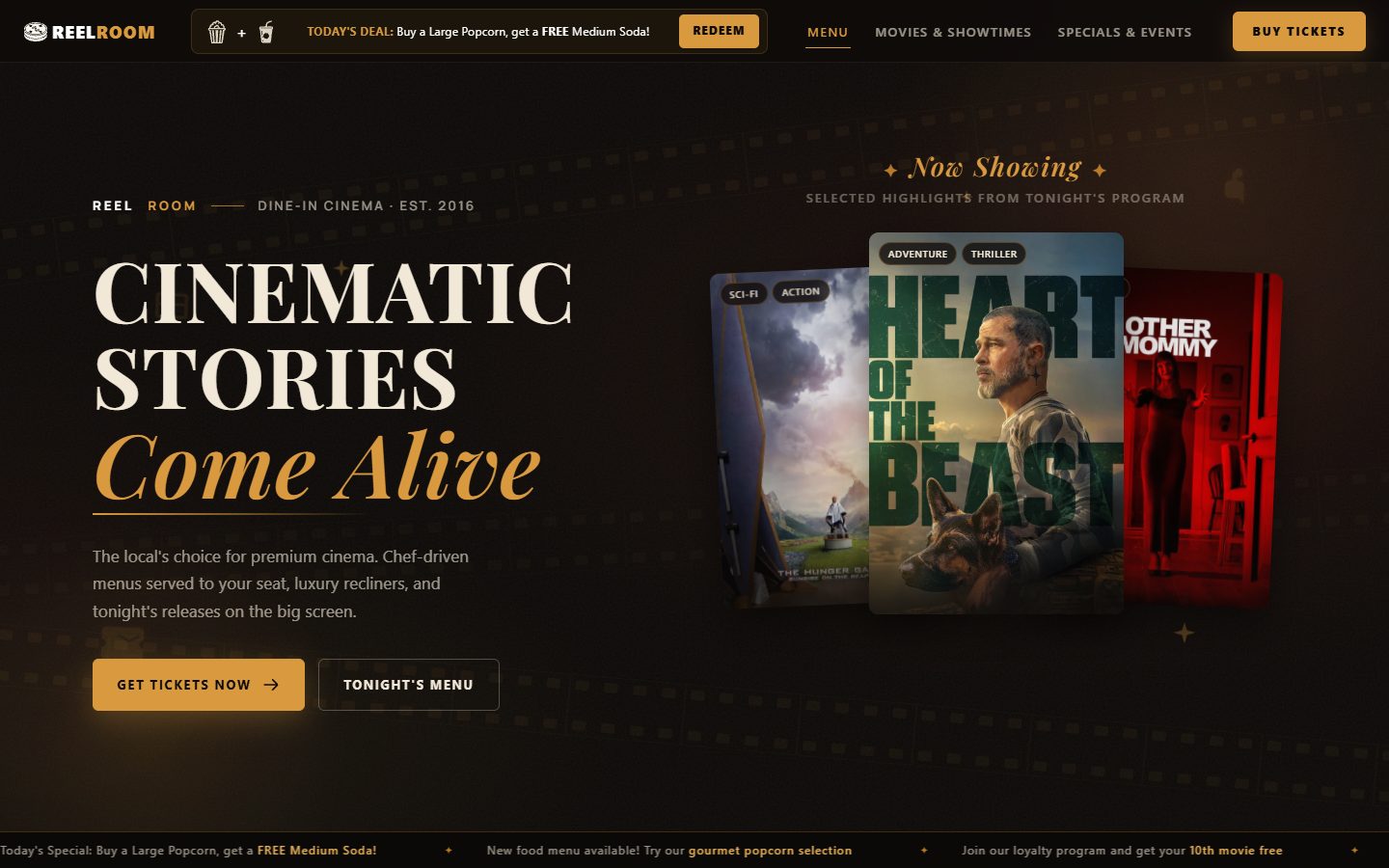
The mechanics are the same as any scheduled booking. The ReelRoom Cinema demo, a concept build for a dine-in cinema, shows the pattern: showtimes, ticket counts, and a booking flow that works on a phone. The case study walks through how it is put together.
The vendor list does quiet work
A preferred-vendor page earns its keep twice: it tells the planner how events actually run at your space, and it is the kind of page caterers and planners link back to, which helps the site's search presence. Nearby-lodging and parking notes help the same way, catching searches like wedding venues near a town name.
If weddings are your main event, the wedding and event sites page shows the other side of the RSVP table: the sites your couples are building. Knowing what they need from you makes your own pages sharper.
Cost and timing
Venue sites start at $1,000 and typically launch in two to four weeks, longer if there are several spaces, heavy galleries, or ticketing to wire in. The quote is fixed after we talk.
If your current site might be worth keeping, a free audit tells you what is worth saving before we discuss a rebuild.
Proof
A concept build for a dine-in cinema: showtimes, ticket counters, and a booking modal that works on a phone. The same mechanics cover public programming at a venue, and the demo is open to try.
Questions
Can the site show live availability?
Honest answer: a half-maintained availability calendar costs more bookings than it saves, because a date that looks open but is not wastes everyone's time. The reliable version is a fast inquiry that captures the date plus notes about which seasons book out. If your booking system genuinely exposes availability, I can surface it, but I will not fake a live calendar.
We get leads through The Knot or WeddingWire. Do we still need a site?
Yes. The marketplace lead is shared with every venue on the results page, and couples who pick you out still check your own site before they tour. The site is where the relationship becomes yours: full galleries, floor plans, real capacity numbers, and an inquiry that goes only to you.
Can one site handle public events and private hire?
Yes, and keeping the paths separate is most of the work. Public programming gets a calendar with ticketing through whatever platform you sell on. Private hire gets the spaces, the capacity tables, and the inquiry flow. The two never compete for the same button.
What photos does a venue site need?
Real events in your space, in the seasons you book, showing the layouts you actually offer. An empty room reads as either new or unpopular. I can give your photographer a shot list: each space set for each layout, golden hour on the grounds, details like the getting-ready suite and the bar.
Talk to me
Ready when you are. Start a project.